“Go beyond the ordinary with our ultimate Indonesia travel guide. From ultra-luxury private yacht tours to deep cultural journeys across Bali, Java, and Komodo, discover the true soul of the archipelago with NusaVibes.”
A Practical First-Time Guide to Travelling in Indonesia
Indonesia is one of Southeast Asia’s most fascinating destinations, offering ancient temples, beautiful islands, rich traditions, tropical landscapes, extraordinary food, and some of the warmest hospitality in the world.
For travellers over 50, the question is often different from that of younger backpackers: Is Indonesia safe, comfortable, and easy to travel around?The short answer is yes—with sensible preparation.
Indonesia is generally welcoming to international visitors, but its enormous size and cultural diversity mean that travelling here requires a little more planning than simply booking a flight and arriving.
Is Indonesia Safe for Travellers Over 50? A Practical First-Time Guide
1. Is Indonesia Safe for People Over 50?
For most visitors, Indonesia can be a very enjoyable and safe destination.The main concerns are not necessarily crime. They are more likely to involve: Traffic and road conditions Heat and humidity Food and drinking water Mosquitoes and tropical illnesses Uneven sidewalks and stairs Long travel distances Strong currents at beaches Natural events such as earthquakes or volcanic activityThe good news is that most of these issues can be managed with preparation.For first-time visitors over 50, comfort and planning are often more important than age.
2. Choose Your Destination Carefully
Indonesia is not just one destination. It is an archipelago of thousands of islands, and the travel experience can be dramatically different from one region to another.
Bali
For a first visit, Bali is often the easiest choice.You will find: International-standard hotels Good restaurants Private drivers Spas and wellness facilities Hospitals and medical clinics Many English-speaking tourism professionals A wide range of toursFor travellers over 50, areas such as Sanur and Ubud can be particularly attractive if you prefer a slower pace. Sanur is relatively relaxed and known for its beachfront atmosphere, while Ubud offers culture, art, nature and wellness.
Java
Java offers a fascinating combination of Indonesian history, cities, mountains and cultural heritage. Yogyakarta is especially interesting for first-time visitors because of its proximity to Borobudur and Prambanan.However, cities such as Jakarta can feel overwhelming because of traffic, crowds and the pace of urban life.
Lombok
Lombok offers beautiful beaches and a quieter atmosphere than Bali.I t can be excellent for travellers who want nature and relaxation, although transportation and tourism infrastructure can be less convenient in some areas.
Raja Ampat
Raja Ampat is spectacular—but it is not necessarily the best destination for a first-time traveller who wants convenience. It is better suited to travellers who are comfortable with remote locations, boat transfers and more complicated logistics.
3. Health: What Should Travellers Over 50 Consider?
You don’t need to be an athlete to enjoy Indonesia. But it is important to understand the climate. Indonesia is hot and humid, particularly for visitors coming from Europe, North America or other cooler climates.
Stay hydrated. Carry bottled or properly treated drinking water, especially when sightseeing. Avoid becoming dehydrated during long walks or outdoor activities.
Take breaks
You don’t need to visit five attractions in one day .A better strategy for many mature travellers is:One major activity + good lunch + rest + relaxed evening.This can make the trip considerably more enjoyable.
Medical facilities
Major tourist destinations such as Bali and Jakarta have international hospitals and private medical facilities. Nevertheless, travellers should consider comprehensive travel insurance that includes medical treatment and emergency evacuation, particularly when visiting remote islands.
4. Food and Water Safety
Indonesian food is one of the highlights of travelling here. From nasi goreng and satay to rendang, gado-gado and regional specialties, there is an enormous variety. However, first-time visitors should be careful about where they eat. A simple rule is:Choose busy restaurants with good hygiene and high customer turnover.
For drinking: Drink sealed bottled water. Check that bottles are properly sealed. Be cautious with untreated tap water. Use bottled water when brushing your teeth if you have a sensitive stomach.Y ou don’t have to avoid street food completely. Instead, choose vendors where you can see that food is freshly prepared and there are plenty of local customers.
5. Traffic Is Probably a Bigger Concern Than Crime
One of the most important things first-time visitors should understand is Indonesian traffic. In major cities and tourist areas, motorcycles and cars can be numerous, and traffic can be unpredictable. For travellers over 50, I would generally recommend:Hire a professional driver rather than renting a motorcycle.This is particularly useful in Bali and other busy destinations. It allows you to concentrate on enjoying the scenery rather than navigating unfamiliar roads. It can also make sightseeing much more comfortable.
6. Walking Can Be More Difficult Than Expected
Indonesia’s tourist areas are not always designed with accessibility in mind. You may encounter: Uneven pavements, Steps Narrow sidewalks, Wet surfaces Temple stairs, Beach paths, Crowded streets. Comfortable shoes are therefore essential. If you have mobility concerns, tell your hotel or tour operator before booking activities. A private tour can often be customized around your walking ability.
7. Respect Indonesian Culture
Indonesia is culturally diverse, and local customs can vary significantly from island to island. Visitors are generally welcomed warmly, but showing respect is important. When visiting temples, mosques or traditional villages: Dress appropriately. Follow local instructions. Remove shoes when required. Ask before photographing people in sensitive situations. Avoid touching religious objects without permission. A little cultural awareness can make a huge difference. And Indonesians often appreciate visitors who make an effort to understand local traditions.
8. Is Indonesia Safe for Solo Travellers Over 50?
Yes, many mature travellers can travel independently in Indonesia. However, solo travel and independent travel don’t have to mean doing everything alone . For a first trip, you might combine: International flight → airport transfer → hotel → private driver → guided sightseeing → free time. This gives you independence while reducing unnecessary stress. For example, instead of figuring out transportation between five different locations, you can arrange a driver and concentrate on enjoying the journey.
9. What About Scams?
As with many major tourist destinations around the world, visitors should remain aware of common tourist scams. Use reputable: Hotels, Tour operators, Transportation services, Money changers, Online booking platforms. Be cautious if someone approaches you with an offer that sounds unusually attractive. And avoid carrying large amounts of cash. A useful principle is:If an offer sounds too good to be true, take a moment before accepting it.
10. Money and Credit Cards
Credit cards are widely accepted at established hotels, restaurants and businesses in major tourist areas. However, cash is still useful. You may need Indonesian rupiah for: Small restaurants, Local markets, Taxis, Small shops, Entrance fees, Tips Rural areas. Using ATMs operated by reputable banks is generally preferable to using unknown machines.
11. Weather and Natural Events
Indonesia is located in a region with significant geological activity. Earthquakes, volcanic eruptions, flooding and other natural events can occasionally affect travel. This doesn’t mean you should avoid Indonesia. Instead:Check local conditions before travelling and follow official instructions. If you’re visiting a volcanic area, pay attention to local authorities and don’t enter restricted zones simply because the view looks interesting.
12. The Biggest Mistake: Trying to See Everything
This is particularly important for first-time visitors.Indonesia is huge. Trying to combine:Jakarta + Bandung + Yogyakarta + Bali + Lombok + Komodo + Raja Ampat into one holiday can turn a relaxing vacation into a logistical marathon. For travellers over 50, a better approach may be:10-Day Example
Days 1–3: Bali — relaxation and culture
Days 4–5: Ubud — nature and cultural experiences
Days 6–7: Balinese countryside — slow travel
Days 8–10: Sanur — beach, wellness and relaxation.
The objective isn’t to collect destinations.It’s to experience Indonesia.
13. Why Indonesia Can Be Excellent for Mature Travellers
One of Indonesia’s greatest advantages is its hospitality. Indonesian culture places considerable value on politeness, family and respect for guests. You can choose the style of travel that suits you:
Luxury: Five-star resorts, private villas and wellness retreats.
Comfort: Excellent hotels, private drivers and organized tours.
Cultural: Temples, traditional villages, music, dance and local communities.
Nature: Beaches, mountains, rice terraces, forests and islands.
Wellness: Yoga, spas, meditation and healthy cuisine.
You don’t have to travel like a backpacker to experience Indonesia.
14. A Better Way to Think About Safety
For travellers over 50, the question shouldn’t simply be:“Is Indonesia safe?”
A better question is:“How can I make my Indonesian journey safe, comfortable and enjoyable?
“The answer is:Plan intelligently. Travel at your own pace. Choose reliable transportation. Protect yourself from the tropical climate. Respect local culture. And leave enough time to simply enjoy the moment.
Indonesia doesn’t have to be an exhausting adventure. It can be a comfortable, enriching and unforgettable journey.
Final Takeaway
For a first-time traveller over 50, Indonesia can be an excellent destination.You can enjoy luxury resorts, fascinating cultures, beautiful landscapes and extraordinary food without sacrificing comfort. The key is not to travel faster. Travel smarter. Indonesia is not a country that should be rushed. It is a country to be experienced—one island, one meal, one conversation and one beautiful sunset at a time.
Questions & Answers for Your Journey to Indonesia
1. Is Indonesia safe for international visitors?
Yes. Indonesia welcomes millions of international visitors every year. As with any destination, travellers should take normal precautions, protect their belongings, use reputable transportation, and follow local advice.
2. Is Indonesia suitable for travellers over 50?
Absolutely. Indonesia offers a wide range of travel experiences for mature travellers, from luxury resorts and wellness retreats to cultural tours, nature experiences and private guided journeys. The key is choosing a comfortable pace and planning transportation in advance.
3. What are the best places to visit in Indonesia?
It depends on what you want to experience.
Bali – Culture, beaches, wellness and hospitality
Yogyakarta – History, temples and Javanese culture
Jakarta – Business, modern Indonesia, shopping and urban culture
Lombok – Beaches, nature and a quieter atmosphere
Komodo – Wildlife and spectacular landscapes
Raja Ampat – Marine life, islands and extraordinary natural beauty
Sumatra – Wildlife, volcanoes and adventure
Sulawesi – Unique cultures, landscapes and marine experiences
4. How many days should I spend in Indonesia?
For a first visit, 7–14 days is a good starting point. If you want to explore several islands, consider two or three weeks or more.Indonesia is very large, so it is usually better to explore fewer destinations properly rather than trying to see everything in one trip.
5. When is the best time to visit Indonesia?
Indonesia has different weather patterns across its many regions. In general, the dry season is often popular for tourism, but conditions vary by destination.Before travelling, check the latest weather conditions for the specific islands and regions you plan to visit.
6. Do I need a visa to visit Indonesia?
Visa requirements depend on your nationality, purpose of travel and length of stay.Always check the latest requirements through the official Indonesian immigration authorities or your nearest Indonesian embassy before travelling.
7. What currency is used in Indonesia?
Indonesia uses the Indonesian Rupiah (IDR).Credit and debit cards are commonly accepted at hotels, major restaurants and established businesses, while cash remains useful for markets, small shops, local transportation and smaller destinations.
8. Can I use English in Indonesia?
English is widely used in major tourist destinations, hotels, restaurants and tourism businesses.Outside tourist areas, English may be less common. Learning a few Indonesian words such as “Terima kasih” (Thank you) and “Selamat pagi” (Good morning) can make interactions more enjoyable.
9. Is Indonesian food safe for visitors?
Indonesian food is one of the country’s great attractions. Visitors can enjoy dishes such as nasi goreng, rendang, satay, gado-gado and many regional specialties.For sensitive stomachs, choose clean and busy restaurants, drink sealed bottled water and introduce unfamiliar foods gradually.
10. Can I drink tap water in Indonesia?
Visitors are generally advised to drink bottled or properly treated water unless they have confirmed that local tap water is safe to drink.Check with your hotel regarding the water supply at your accommodation.
11. Should I rent a motorcycle?
Motorcycles are common in Indonesia, but traffic and road conditions can be challenging, particularly for visitors unfamiliar with local driving conditions.If you are not an experienced motorcycle rider, consider using a professional driver, taxi or reputable ride-hailing service instead.
12. Is public transportation available?
Yes. Indonesia has buses, trains, ferries, taxis, ride-hailing services and domestic flights.Transportation quality varies considerably between regions. For longer journeys between islands, domestic flights are often the most practical option.
13. What should I wear in Indonesia?
Indonesia is generally warm and humid, so lightweight clothing is comfortable.When visiting religious sites or traditional communities, dress respectfully and follow local guidelines. Some locations may require shoulders and knees to be covered.
14. What should I do if I visit a temple or mosque?
Respect local customs.You may be asked to remove your shoes, cover certain parts of your body or follow specific visitor rules.When in doubt, observe what local visitors are doing or ask your guide.
15. Is Indonesia suitable for solo travellers?
Yes. Indonesia can be a rewarding destination for solo travellers.For your first visit, consider using reputable hotels, transportation providers and tour operators. Sharing your itinerary with someone at home is also a sensible precaution.
16. Can I travel around Indonesia with my family?
Yes. Indonesia offers many family-friendly destinations and activities.Families can choose from beaches, cultural attractions, wildlife experiences, nature tours and resorts.
17. What should older travellers consider before visiting Indonesia?
Consider your walking ability, climate tolerance, medication requirements, travel insurance and the length of transportation journeys.A private driver, comfortable hotel and slower itinerary can make a significant difference.
18. What should I do in an emergency?
For serious emergencies, contact the appropriate local emergency services and seek assistance from your hotel or tour operator.It is also recommended to keep your passport, travel insurance details, emergency contacts and important medical information accessible.
19. Do I need travel insurance?
Travel insurance is strongly recommended. Consider coverage for medical treatment, trip cancellation, baggage problems, travel delays and emergency evacuation, particularly if you plan to visit remote destinations or participate in adventure activities.
20. Is Indonesia expensive?
Indonesia offers options for almost every budget.Visitors can choose from affordable local accommodation and restaurants to international five-star hotels, private villas and luxury experiences.Your overall budget will depend heavily on accommodation, transportation, activities and the number of destinations you visit.
21. What are some cultural experiences I should not miss?
Indonesia’s culture is incredibly diverse.Depending on your destination, you might experience: Traditional music and dance, Batik-making, Local ceremonies, Traditional villages, Indonesian cuisine, Arts and crafts, Religious heritage, Traditional markets, Local festivals. These experiences often provide a deeper understanding of Indonesia than simply visiting tourist attractions.
22. Can I meet local Indonesian communities?
Yes. Community-based tourism and cultural experiences can provide opportunities to meet local people and learn about their daily lives.Always respect privacy and ask permission before photographing people.
23. What should I avoid doing in Indonesia?
Avoid disrespecting religious traditions, entering restricted areas, ignoring safety instructions, driving irresponsibly, littering natural areas or photographing sensitive cultural activities without permission.
24. How can NusaVibes help me plan my trip?
NusaVibes is designed to help international visitors discover Indonesia through culture, people, music, tourism, lifestyle, business and local experiences. Explore our destination stories, discover local culture, learn about Indonesian communities and use NusaVibes as your starting point for discovering Indonesia
25. What is the best way to experience Indonesia?
Don’t simply visit Indonesia.
Experience it.
Taste the food.
Listen to the music.
Meet the people.
Discover the traditions.
Explore the islands.
Understand the culture.
NusaVibes — Discover Indonesia. Connect with the World.
Book a Private Curated Tour with NusaVibes
Discover Indonesia beyond the ordinary. Curated exclusively for you, our private tours unveil the archipelago’s most extraordinary heritage sites, timeless traditions, and hidden cultural treasures — accessed with the ease and discretion only a bespoke journey can offer. Accompanied by an expert local guide, every detail is thoughtfully arranged so you can simply immerse yourself in the moment.This is not a tour. It is an invitation into Indonesia’s soul.
[Reserve Your Private Curated Tour →]
This ultra-luxury itinerary bypasses urban road congestion entirely, combining private helicopter transfers with a private motor yacht cruise across the Java Sea and Thousand Islands (Kepulauan Seribu).
Tour Concept: “Skyline to Archipelago — Jakarta by Air & Sea
Curated Itinerary Breakdown
Time & Phase
Mode of Transport Experience & Highlights
08:30 – 10:00
Aerial Heritage & Skyline
Private Helicopter Charter
(Bell 505 / Airbus H130)• VIP departure from a South Jakarta/SCBD helipad.
• Low-altitude panoramic flight over Monas, the Old Batavia coastline, and the Java Sea.
• Direct rooftop/marina helipad landing at Batavia Marina or Pantai Mutiara.
10:15 – 14:00
Archipelagic Cruise & Seclusion
Private Motor Yacht
(50–70ft Luxury Cruiser)• Board at the private marina with champagne welcome service.
• Cruise past historic colonial islands (Pulau Onrust, Pulau Edam) toward secluded outer cays (Pulau Macan or Asha Island).
• Onboard private chef serving fresh grilled seafood and Indonesian fusion gastronomy.
14:00 – 16:30
Island Leisure & Water Sports
Yacht Anchorage• Snorkeling pristine coral reefs, sea-bobbing, paddleboarding, or lounging on secluded white-sand sandbanks.
• Private marine host providing context on the archipelagic marine ecosystem.
17:00 – 18:30
Java Sea Sunset Cruise
Yacht Cruising Return• Golden-hour cruise back toward Jakarta Bay with live acoustic or curated music ambiance.
• Canapés, artisanal cocktails, and front-row sunset views against the coastal skyline.
19:00 – Late
Fine Dining Finale
Chauffeured VIP Sprinter / Alphard• Docking at the marina with private ground transfer to an exclusive fine-dining enclave in Menteng or a private lounge in SCBD.
Ultra-Luxury Inclusions
Helicopter Transfer: Certified VIP helicopter charter with licensed pilot and landing clearance.
Fully Crewed Yacht Charter: Captain, marine engineer, private stewardess, and private onboard chef.
Concierge Hospitality: Custom sommelier wine/champagne pairings and premium water sports equipment.
Private Fixer & Host: Multilingual cultural host from Nusavibes managing private access and seamless coordination throughout the day.
Booking & Inquiries
Concierge Channel: Direct inquiry via WhatsApp at +62 812 8588 7698 or smile@nusavibes.world [fill a form below]
** contact us for a luxurious pre-wedding experience
*** for booking a regular tour, we can arrange with our nusavibes partner in tour and travel business
Contact NusaVibes at Bottom
Before departure
Visa. Most nationalities can enter visa-free or get a Visa on Arrival (30 days, extendable once) for tourism. Check your specific country’s requirements before booking — rules shift, and it’s the first thing worth confirming, not assuming. Check whether your nationality qualifies for Visa on Arrival (VoA), e-VoA, visa-free entry, or another visa type. The rules depend on nationality and purpose of travel.
Visa documents: If using e-VoA, ensure your passport details exactly match the visa application.
When to go. Indonesia sits on the equator, so “seasons” mean wet and dry, not hot and cold — and they don’t line up the same way across the archipelago. Java and Bali are driest from May to September. Sumatra and Kalimantan run on a different rhythm. If your trip spans multiple islands, check each one separately rather than planning around a single national “best time to visit.”
Health. No mandatory vaccinations for most travellers, but routine ones (and often typhoid/hepatitis A) are commonly recommended — talk to a travel clinic a few weeks out. Tap water isn’t drinkable; bottled or filtered water is the norm everywhere.
Passport: Make sure it is valid for at least 6 months from your arrival date.
Return/onward ticket: This may be required, particularly for VoA/e-VoA entry.
Accommodation details: Keep your hotel/address and contact information available.
Customs/arrival requirements: Complete any required Indonesian arrival/customs declarations before or during arrival, according to the current rules. If you are using e-VoAThe official Indonesian immigration information says e-VoA holders generally receive an initial 30-day stay, with an option to extend once, subject to the applicable rules. The current listed fee for B1 VoA is Rp500,000.
Cultural Orientation
This is the part most guides skip, and it’s the part that actually changes your trip.Indonesia is not one culture. It’s the world’s largest archipelago and the fourth most populous country on earth, home to over 300 ethnic groups and more than 700 living languages. Java is not Bali. Bali is not Sumatra. Sumatra is not Papua. Each island — often each region within an island — carries its own history, religion, cuisine, and customs. Assuming “Indonesian culture” is one thing is the fastest way to miss what’s actually in front of you.
Religion shapes daily life, and it varies by place. Indonesia is majority Muslim — the largest Muslim population of any country — but Bali is predominantly Hindu, parts of eastern Indonesia and North Sumatra are largely Christian, and older animist traditions still shape ritual life in pockets of Kalimantan, Sulawesi, and Papua. Dress modestly at religious sites regardless of the faith — cover shoulders and knees, remove shoes where indicated, and if in doubt, watch what locals do before you act.
A few etiquette basics that go a long way:Use your right hand (or both) to give, receive, or eat — the left hand is traditionally considered unclean.A slight bow or nod with a smile is a safe, respectful greeting in most contexts.Public displays of anger or raised voices are read very differently here than in many Western cultures — calm, indirect communication is the norm, especially in Java.Ask before photographing people, ceremonies, or religious practices. A ritual isn’t a photo backdrop.
A few words of Bahasa Indonesia go further than you’d think:
Terima kasih — thank you
Permisi — excuse me
Selamat pagi / siang / malam — good morning / afternoon / evening
Boleh saya…? — May I…?
Money & Practical Basics
The currency is the Indonesian Rupiah (IDR) — prices will look like large numbers; it takes a day or two to stop flinching. ATMs are widely available in cities and tourist areas, less so in remote regions, so carry cash when heading off the beaten path. A local SIM or eSIM is cheap and easy to set up on arrival, and worth doing on day one. As with most heavily-touristed destinations, be alert to overpriced “taxi” quotes and overly persistent street vendors — polite firmness works better than confrontation.
Driving Rules in Indonesia — What International Travellers Need to Know
Drive on the left. Indonesia follows left-hand traffic, with the steering wheel on the right side of the vehicle — the opposite of the US, most of Europe, and much of Asia. This trips up a lot of first-time drivers.
You need an International Driving Permit (IDP), not just your home license. An IDP issued in your home country is generally valid for driving in Indonesia, provided it’s endorsed for the correct vehicle class, but it’s intended for short-term visitors. Driving on a foreign license alone isn’t accepted by local authorities — you must carry the IDP together with your original license, and failing to produce both during a check results in an immediate fine. Get your IDP before you leave home (e.g., via AAA in the US) — it can’t be arranged on arrival.
Bali Visa
The permit must match the vehicle. Your IDP must specifically cover the vehicle category you’re driving — a car endorsement doesn’t extend to a motorbike, and this is checked. If you plan to rent a scooter and a car, make sure your IDP covers both classes. Drivinginternationalassociation
One exception: travellers from ASEAN countries can drive without an IDP; everyone else needs one, or risks fines and rental companies refusing service. WAHDAH Indonesia
Enforcement has tightened in 2026, especially in Bali. Bali launched the “Dharma Dewata” task force in April 2026, moving toward stricter, less flexible enforcement of foreign drivers’ documentation than in previous years — the days of talking your way past a checkpoint are largely over. Drivinginternationalassociation
Insurance depends on being properly licensed. Most insurance policies contain a clause that invalidates coverage if the driver isn’t legally licensed, meaning you’re personally liable for damages and medical costs if you’re caught driving without the right documents.
Bali Visa
If you’re staying long-term (on a KITAS/KITAP), an IDP won’t cut it indefinitely — residency permit holders are expected to apply for a local Indonesian SIM (driving license) directly rather than relying on a foreign IDP indefinitely.
Practical realities on the road:Traffic is dense and can feel chaotic, especially in Jakarta and Bali — scooters weave between cars constantly.Helmets are legally required on motorbikes, though enforcement varies by region.Rural and mountain roads can be narrow, poorly lit, and shared with pedestrians, livestock, and roadside stalls — night driving outside cities is best avoided if you’re unfamiliar with the terrain.Horn use is common and not aggressive — it’s often just a “I’m here” signal, not road rage.
Customs Declaration for Indonesia — What Travellers Need to Know
It’s now part of the “All Indonesia Arrival Card.” As of 2026, the customs declaration is folded into a unified digital form called the All Indonesia Arrival Card, which consolidates customs, health, and immigration information in one place — replacing the older separate Electronic Customs Declaration and health pass systems. It applies to all nationalities — tourists, business travellers, transit passengers, and returning residents — across all Indonesian destinations.
When to fill it out. You can complete it up to three days before arrival on the official All Indonesia website, and once submitted you receive a QR code that airport officers scan on arrival. Airlines often link to it directly, and it’s worth completing before your flight to avoid delays, since unstable airport wifi can make it harder to finish on arrival.
What you must declare:Cash over IDR 100 million (roughly USD 6,500)Alcohol above 1 liter per person — travellers 21+ get a duty-free exemption of up to 1 liter, with anything above that handled under customs rules and possibly destroyedExtra cigarettes beyond the standard allowance, and any commercial (not personal-use) goodsAnimals, plants, and their products — including things like wood carvings, herbal medicines, and dried flowersFirearms, ammunition, explosives, and pornographic material are completely prohibited, not just declarable — carrying them can result in immediate arrest
Personal items are generally fine. Clothing, toiletries, and everyday accessories don’t need declaring if their total value is USD 250 or less, though expensive jewelry may need to be reported.
Green Channel vs Red Channel. On arrival you choose the Green Channel if you have nothing to declare or the Red Channel if you’re declaring dutiable items — staff may still scan your QR code either way.
When unsure, declare it. Indonesia has tightened enforcement, so if you’re not sure whether something needs declaring, the safest move is to declare it anyway rather than risk fines, long inspections, or confiscation. Underreporting cash specifically can trigger a 10% penalty, capped around Rp300,000,000.
Electronics note. A tourist using their foreign SIM on roaming doesn’t need IMEI customs registration; that’s only required if you register a long-term Indonesian SIM for use beyond 90 days.
Watch for fake sites. The arrival card is completely free — use only official Indonesian government sites, since unofficial copycat sites sometimes charge unnecessary fees.
Go Deeper
This guide is a starting point, not the full picture. Explore our Culture & Heritage and Stories sections for the histories, people, and traditions behind these places — the context that turns a trip into an understanding.
Indonesia is huge, so the best places depend on whether you want beaches, nature, culture, food, diving, or nightlife.
First Time in Indonesia: A Cultural Traveller’s GuideIndonesia isn’t one destination — it’s 17,000 islands, hundreds of ethnic groups, and more languages than most countries have cities. This guide isn’t here to give you a checklist. It’s here to help you arrive with the right questions.!
Most travellers land in Bali, see the version of Indonesia built for tourism, and leave thinking they’ve seen the country. They haven’t. Bali is one island among thousands, one culture among hundreds. This guide is for the traveller who wants to go a layer deeper — who’s curious not just about where to go, but why things are the way they are once you get there.
Best places to visit in Indonesia
Bali — Best all-round choice. Beaches, temples, rice terraces, cafés, nightlife, and plenty of activities. Visit Ubud for culture/nature, Uluwatu for beaches and sunsets, and Seminyak/Canggu for restaurants and nightlife.
Yogyakarta — Best for culture & history
Explore Borobudur, Prambanan, traditional Javanese culture, markets, and local food.
Komodo National Park — Best for adventure
Famous for Komodo dragons, spectacular viewpoints, snorkeling, diving, and beautiful islands. Base yourself in
Labuan Bajo.Lombok — Best for quieter beaches
Beautiful beaches, waterfalls, surfing, and
Mount Rinjani. Generally less hectic than Bali.
Raja Ampat — Best for diving & marine life
One of Indonesia’s premier destinations for coral reefs, snorkeling, diving, and remote island scenery.
Jakarta — Best for city life
Shopping, restaurants, museums, nightlife, and a good introduction to modern Indonesia.
Bandung — Best for food & cool weather
Mountain scenery, cafés, shopping, tea plantations, and Sundanese cuisine.
Lake Toba — Best for dramatic scenery
A massive volcanic lake with Samosir Island, Batak culture, and a much slower pace.
Bromo Tengger Semeru National Park — Best for mountains
Sunrise over Mount Bromo and the surrounding volcanic landscape is spectacular.
Flores — Best for an adventurous road trip
Waterfalls, traditional villages, mountains, beaches, and access to Komodo.
If it’s your first trip I’d recommend:Bali → Yogyakarta → Bromo → Labuan Bajo/Komodo
For around 10–14 days, this gives you a good mix of beaches + culture + volcanoes + wildlife + snorkeling without trying to cover too much of Indonesia.


JAVA
Experience the best of Central Java in a single day through Yogyakarta’s premier heritage and adventure circuit: the Borobudur Sunrise, Mount Merapi Lava Jeep Tour, and Prambanan Temple.
What Makes This Journey Unforgettable
Dawn at Borobudur: Start before daybreak to watch the first golden light pierce the morning mist over the Menoreh Hills, illuminating the 9th-century stupas of the world’s largest Buddhist sanctuary. Climb the monument’s stone terraces to study its intricate relief galleries up close.
Thrill on the Slopes of Merapi: Hop into an open-air 4×4 classic Jeep for a rugged ride across the volcanic terrain of Indonesia’s most active volcano. Visit historical landmarks left in the wake of past eruptions, including the Kaliadem bunker and local memorial sites.
Afternoon Grandeur at Prambanan: Conclude the afternoon wandering among the soaring, needle-like stone spires of Indonesia’s grandest Hindu temple compound, dedicated to the Trimurti (Shiva, Vishnu, and Brahma) and adorned with the carved epic of the Ramayana.Why Join?From tranquil spiritual heights at dawn to high-octane volcanic landscapes at noon and towering architectural marvels before dusk, this tour captures the soul, history, and raw natural power of Java in one seamless day trip.
Borobudur Sunrise (Hill/Temple Climb), Merapi Jeep & Prambanan Tour
BALI
The sea spray hits your face long before the boat slows down, cutting through the deep cobalt swells of the Badung Strait.
Behind you, mainland Bali recedes into a hazy silhouette. Ahead rises an island of raw, towering limestone fortresses draped in emerald green: Nusa Penida.
Stepping onto the harbor, you immediately sense that Penida does not cater to the timid. While its famous neighbor hums with beach clubs and manicured promenades, this island feels untamed, mythical, and immense. The coastal breeze smells of salt and drying cloves, carrying echoes of ancient folklore from an island once revered across the archipelago as a realm of potent spirits and ancient magic. Your journey winds inland along narrow sun-dappled lanes, where rooster crows and the fluttering fringes of temple banners greet every turn.
Then, without warning, the canopy peels open, and the earth falls away into pure wonder.You stand at the edge of Kelingking. The wind roars off the Indian Ocean, rushing hundreds of meters up sheer white cliffs carved like the spine of a prehistoric titan resting in the surf. Far below, translucent waves of cyan crash into ribbon-thin white sand with hypnotic, rhythmic thunder. No postcard or screen prepares you for the sheer scale—it steals your breath and insists on total silence.
Further along the coast, the ocean carves its way through Broken Beach, swirling into a natural circular amphitheater where sea turtles drift lazily through turquoise shallows.
Just steps away, Angel’s Billabong glistens like an emerald infinity pool carved straight out of volcanic rock, reflecting the midday sky.Yet Penida’s truest magic lingers beneath the surface.
Slipping into the crystalline waters of Manta Point, the noise of the world dissolves into serene blue silence. Out of the deep blue mist, gentle giants emerge—giant reef manta rays spanning several meters across, gliding effortlessly in sweeping, circular dances just arm’s length away. To share the water with creatures so ancient and graceful is a humbling, unforgettable encounter that shifts something inside you forever.As late afternoon descends, the island turns to liquid gold.
At Diamond Beach, the sun casts long, dramatic shadows from spear-shaped sea stacks across pristine sand, while the sky blooms into hues of apricot, violet, and deep rose.Nusa Penida is not just another pin on a map; it is a wild, beating heart waiting on the edge of the horizon—an island that reminds you what genuine wonder feels like. Pack your boots, leave the noise behind, and come witness Central Java and Bali’s most rugged sanctuary for yourself.
Ready to turn this story into your trip?
West & East Nusa Penida Highlights Day Tour from Bali
KOMODO ISLAND
Long before ships with billowing sails crossed the Flores Sea, Komodo Island was a quiet sanctuary of sun-scorched hills, whispering savannah grass, and wild deer. According to the island’s indigenous Ata Modo people, the giant lizards were not born monsters, but flesh-and-blood kin to humanity.
In those forgotten days, a woman known as the Dragon Princess—Putri Naga—lived on the island. Beloved for her quiet wisdom, she married a local villager named Moja. When the time came for her to give birth, the village rejoiced, but the cradle held an unimaginable mystery: she delivered fraternal twins.The first was a healthy, handsome baby boy whom the parents named Si Gerong.The second was not human at all. Out from the swaddling crawled a tiny, scaly creature with clawed feet, a flicking tongue, and golden, unblinking eyes. Though heartbroken by what people might say, the mother could not deny her maternal bond. She named the scaly child Orah.
As months passed, the two siblings grew side by side in the stilt home. Yet while Gerong thrived on milk, cooked rice, and sunlight, Orah longed for the forest floor, raw meat, and damp rock hollows. The village began to whisper in fear. Realizing the islanders would never accept her lizard child, Putri Naga carried Orah deep into the arid valleys, weeping as she released her into the wild forest to live free among the stones and dry savannah trees.Years drifted by like passing monsoon clouds. Gerong grew into a tall, strong hunter, famed across the shores for his sharp spear and swift footwork. He knew every deer trail and watering hole on the island, never knowing of the twin sister lost to the wild.
One afternoon, hot winds rustled the dry lontar palms as Gerong tracked a wild boar through a desolate valley. Just as he cornered his prize near a limestone outcrop, the bush cracked violently open. A massive beast emerged—armored in thick grey scales, powerful claws digging into the soil, its yellow fork tongue tasting the afternoon heat. It was a giant lizard, larger than any living thing Gerong had ever seen, lunging toward his kill.Terrified and protective of his hunt, Gerong raised his iron-tipped spear high above his shoulder, bracing to pierce the beast’s throat. The creature stood its ground, hissing a deep, vibrating warning.
Just as Gerong tensed his arms to strike, a soft, commanding cry pierced the valley:“Stop, my son! Do not thrust your spear!” Gerong lowered his weapon in astonishment. Out from the shadowed trees stepped an elderly woman with silver hair and tears shining in her eyes. It was his mother.”Mother, stand back!” Gerong shouted. “This beast will devour us both!””No, Gerong,” she said gently, stepping between the young hunter and the snarling reptile. “Lower your weapon and look into her eyes. This is Orah, your twin sister. You shared my womb together. You were born from the same heartbeat.
“Gerong stared down into the golden, slit-pupil eyes of the giant lizard. As his mother spoke, the creature’s menacing hiss softened into a slow, quiet breath. The rage left her posture, and she gently bowed her great head toward the ground. For the first time, Gerong saw not a monster, but a kindred spirit bound to him by blood and breath.With tears stinging his eyes, Gerong lowered his spear to the red dust. He carved the roasted boar and laid half of it before his sister, who ate quietly and then slipped gracefully back into the shadows of the hills.
From that day onward, the Ata Modo vowed never to harm the giant lizards, calling them Sebay—their scaly siblings. Even today, when a dragon wanders near the village, the islanders do not greet it with weapons or fear; they speak softly to it, share their catch, and remember the ancient mother who taught them that love and kinship can bridge the wild divide.
Long before ships with billowing sails crossed the Flores Sea, Komodo Island was a quiet sanctuary of sun-scorched hills, whispering savannah grass, and wild deer. According to the island’s indigenous Ata Modo people, the giant lizards were not born monsters, but flesh-and-blood kin to humanity.In those forgotten days, a woman known as the Dragon Princess—Putri Naga—lived on the island. Beloved for her quiet wisdom, she married a local villager named Moja. When the time came for her to give birth, the village rejoiced, but the cradle held an unimaginable mystery: she delivered fraternal twins.The first was a healthy, handsome baby boy whom the parents named Si Gerong.The second was not human at all. Out from the swaddling crawled a tiny, scaly creature with clawed feet, a flicking tongue, and golden, unblinking eyes. Though heartbroken by what people might say, the mother could not deny her maternal bond. She named the scaly child Orah.As months passed, the two siblings grew side by side in the stilt home. Yet while Gerong thrived on milk, cooked rice, and sunlight, Orah longed for the forest floor, raw meat, and damp rock hollows. The village began to whisper in fear. Realizing the islanders would never accept her lizard child, Putri Naga carried Orah deep into the arid valleys, weeping as she released her into the wild forest to live free among the stones and dry savannah trees.Years drifted by like passing monsoon clouds. Gerong grew into a tall, strong hunter, famed across the shores for his sharp spear and swift footwork. He knew every deer trail and watering hole on the island, never knowing of the twin sister lost to the wild.One afternoon, hot winds rustled the dry lontar palms as Gerong tracked a wild boar through a desolate valley. Just as he cornered his prize near a limestone outcrop, the bush cracked violently open. A massive beast emerged—armored in thick grey scales, powerful claws digging into the soil, its yellow fork tongue tasting the afternoon heat. It was a giant lizard, larger than any living thing Gerong had ever seen, lunging toward his kill.Terrified and protective of his hunt, Gerong raised his iron-tipped spear high above his shoulder, bracing to pierce the beast’s throat. The creature stood its ground, hissing a deep, vibrating warning.Just as Gerong tensed his arms to strike, a soft, commanding cry pierced the valley:“Stop, my son! Do not thrust your spear!”Gerong lowered his weapon in astonishment. Out from the shadowed trees stepped an elderly woman with silver hair and tears shining in her eyes. It was his mother.”Mother, stand back!” Gerong shouted. “This beast will devour us both!””No, Gerong,” she said gently, stepping between the young hunter and the snarling reptile. “Lower your weapon and look into her eyes. This is Orah, your twin sister. You shared my womb together. You were born from the same heartbeat.”Gerong stared down into the golden, slit-pupil eyes of the giant lizard. As his mother spoke, the creature’s menacing hiss softened into a slow, quiet breath. The rage left her posture, and she gently bowed her great head toward the ground. For the first time, Gerong saw not a monster, but a kindred spirit bound to him by blood and breath.With tears stinging his eyes, Gerong lowered his spear to the red dust. He carved the roasted boar and laid half of it before his sister, who ate quietly and then slipped gracefully back into the shadows of the hills.From that day onward, the Ata Modo vowed never to harm the giant lizards, calling them Sebay—their scaly siblings. Even today, when a dragon wanders near the village, the islanders do not greet it with weapons or fear; they speak softly to it, share their catch, and remember the ancient mother who taught them that love and kinship can bridge the wild divide.
Long before ships with billowing sails crossed the Flores Sea, Komodo Island was a quiet sanctuary of sun-scorched hills, whispering savannah grass, and wild deer. According to the island’s indigenous Ata Modo people, the giant lizards were not born monsters, but flesh-and-blood kin to humanity.In those forgotten days, a woman known as the Dragon Princess—Putri Naga—lived on the island. Beloved for her quiet wisdom, she married a local villager named Moja. When the time came for her to give birth, the village rejoiced, but the cradle held an unimaginable mystery: she delivered fraternal twins.The first was a healthy, handsome baby boy whom the parents named Si Gerong.The second was not human at all. Out from the swaddling crawled a tiny, scaly creature with clawed feet, a flicking tongue, and golden, unblinking eyes. Though heartbroken by what people might say, the mother could not deny her maternal bond. She named the scaly child Orah.As months passed, the two siblings grew side by side in the stilt home. Yet while Gerong thrived on milk, cooked rice, and sunlight, Orah longed for the forest floor, raw meat, and damp rock hollows. The village began to whisper in fear. Realizing the islanders would never accept her lizard child, Putri Naga carried Orah deep into the arid valleys, weeping as she released her into the wild forest to live free among the stones and dry savannah trees.Years drifted by like passing monsoon clouds. Gerong grew into a tall, strong hunter, famed across the shores for his sharp spear and swift footwork. He knew every deer trail and watering hole on the island, never knowing of the twin sister lost to the wild.One afternoon, hot winds rustled the dry lontar palms as Gerong tracked a wild boar through a desolate valley. Just as he cornered his prize near a limestone outcrop, the bush cracked violently open. A massive beast emerged—armored in thick grey scales, powerful claws digging into the soil, its yellow fork tongue tasting the afternoon heat. It was a giant lizard, larger than any living thing Gerong had ever seen, lunging toward his kill.Terrified and protective of his hunt, Gerong raised his iron-tipped spear high above his shoulder, bracing to pierce the beast’s throat. The creature stood its ground, hissing a deep, vibrating warning.Just as Gerong tensed his arms to strike, a soft, commanding cry pierced the valley:“Stop, my son! Do not thrust your spear!”Gerong lowered his weapon in astonishment. Out from the shadowed trees stepped an elderly woman with silver hair and tears shining in her eyes. It was his mother.”Mother, stand back!” Gerong shouted. “This beast will devour us both!””No, Gerong,” she said gently, stepping between the young hunter and the snarling reptile. “Lower your weapon and look into her eyes. This is Orah, your twin sister. You shared my womb together. You were born from the same heartbeat.”Gerong stared down into the golden, slit-pupil eyes of the giant lizard. As his mother spoke, the creature’s menacing hiss softened into a slow, quiet breath. The rage left her posture, and she gently bowed her great head toward the ground. For the first time, Gerong saw not a monster, but a kindred spirit bound to him by blood and breath.With tears stinging his eyes, Gerong lowered his spear to the red dust. He carved the roasted boar and laid half of it before his sister, who ate quietly and then slipped gracefully back into the shadows of the hills.From that day onward, the Ata Modo vowed never to harm the giant lizards, calling them Sebay—their scaly siblings. Even today, when a dragon wanders near the village, the islanders do not greet it with weapons or fear; they speak softly to it, share their catch, and remember the ancient mother who taught them that love and kinship can bridge the wild divide.
Explore more about Komodo’s heritage and wildlife
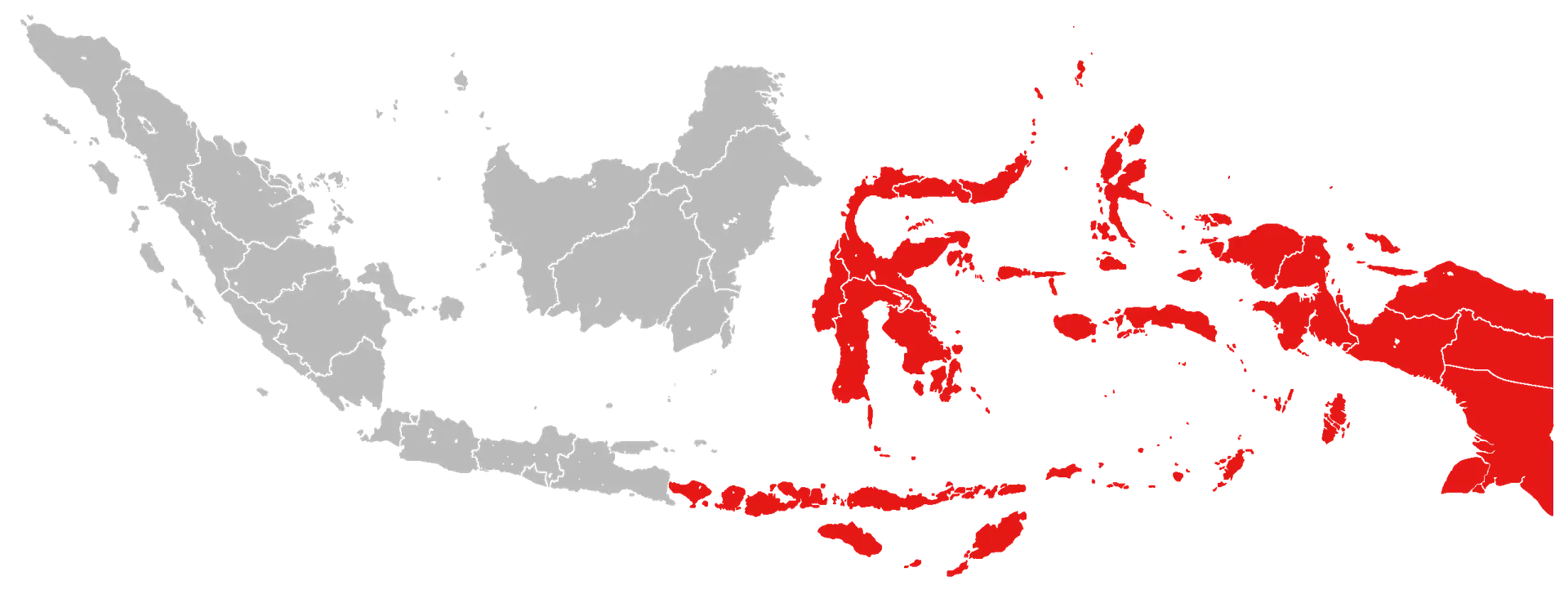
TRAVEL GUIDE FOR EASTERN INDONESIA
Eastern Indonesia is a treasure trove of culture and natural beauty. From the stunning beaches of Bali to the lush rainforests of Papua, each region offers something unique. Explore vibrant local traditions, delicious cuisine, and breathtaking landscapes that tell the story of this diverse archipelago. Join us as we uncover the rich history and vibrant communities that call this part of the country home.Eastern Indonesia offers an untouched paradise filled with stunning landscapes and vibrant culture. Beyond the popular tourist spots, it features serene beaches, rich marine life, and fascinating traditions. From the breathtaking beauty of Raja Ampat to the majestic volcanic mountains of Flores, every corner tells a story waiting to be discovered.The waters are teeming with life and colors never seen before. Divers and snorkelers will find lush coral reefs and unique species while exploring this underwater treasure. The communities here thrive on their heritage, with ancient customs visible in every woven fabric and dance.Visiting these islands is about the experience—savoring local dishes, sharing tales with villagers, and enjoying the tranquil pace of life. It’s a reminder of the beauty that exists off the beaten path.