“Discover the best local Indonesian dishes, from comforting street food favorites to authentic regional and family recipes.”
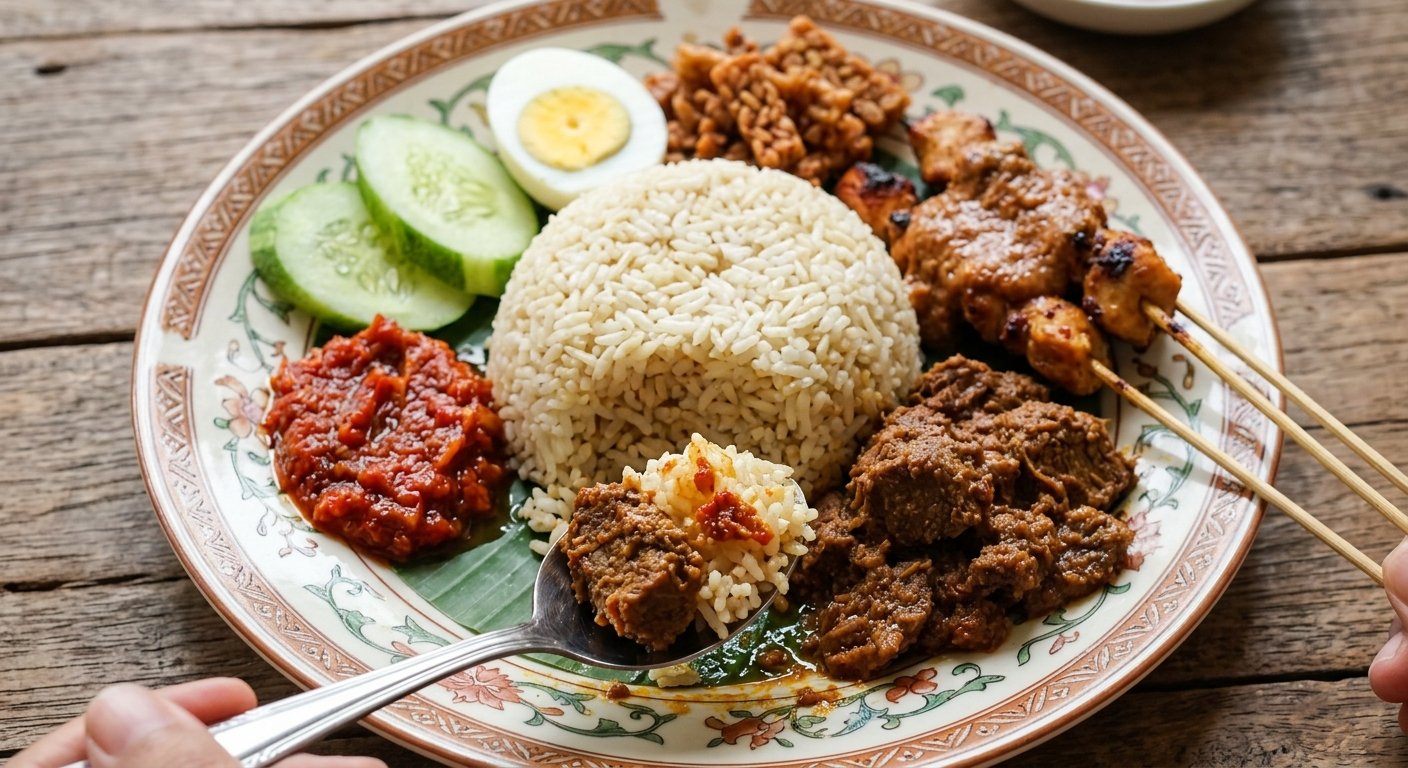
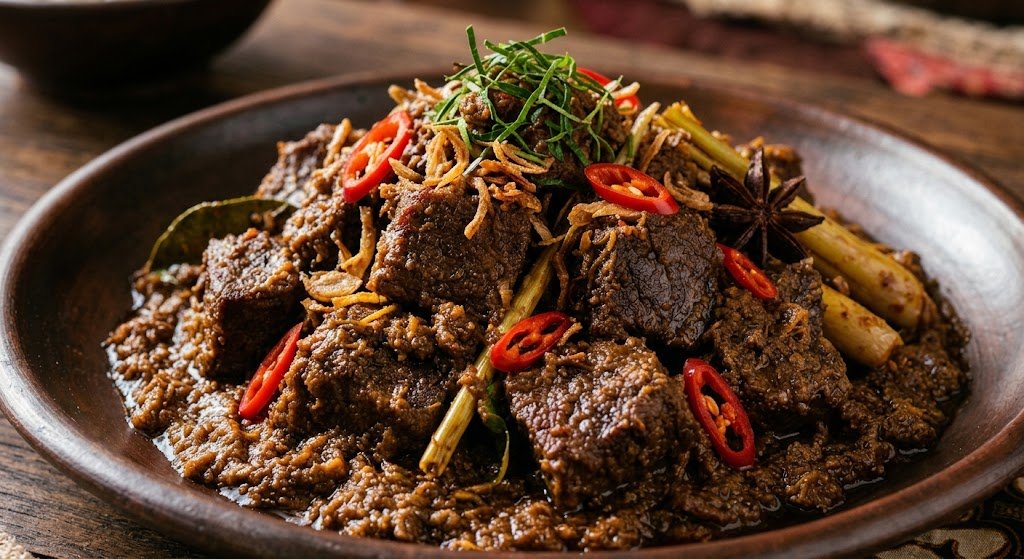
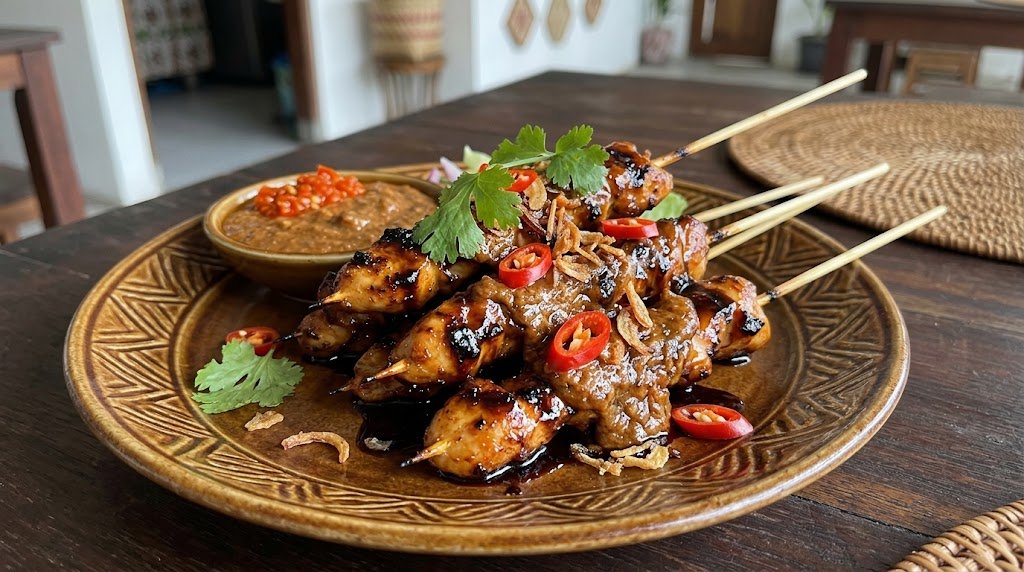
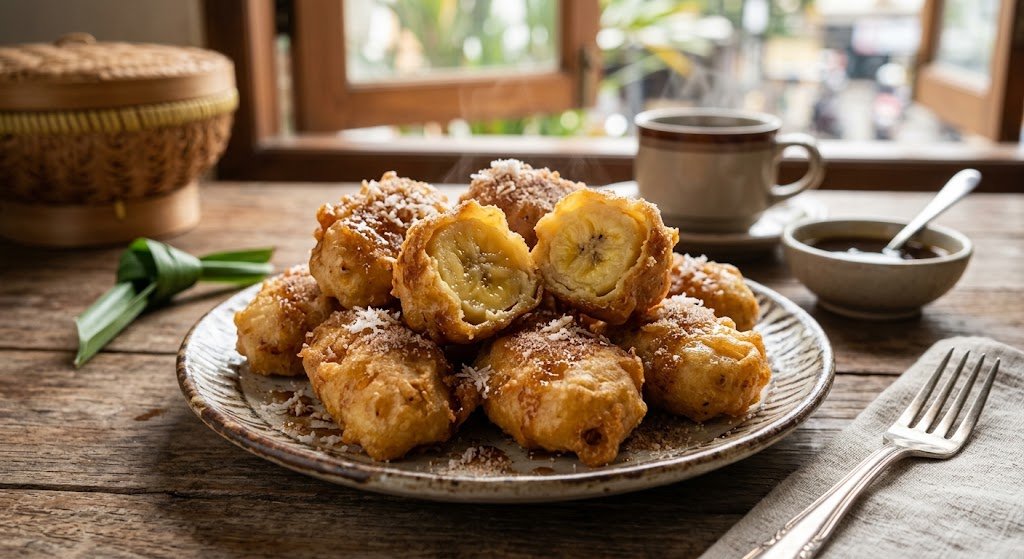
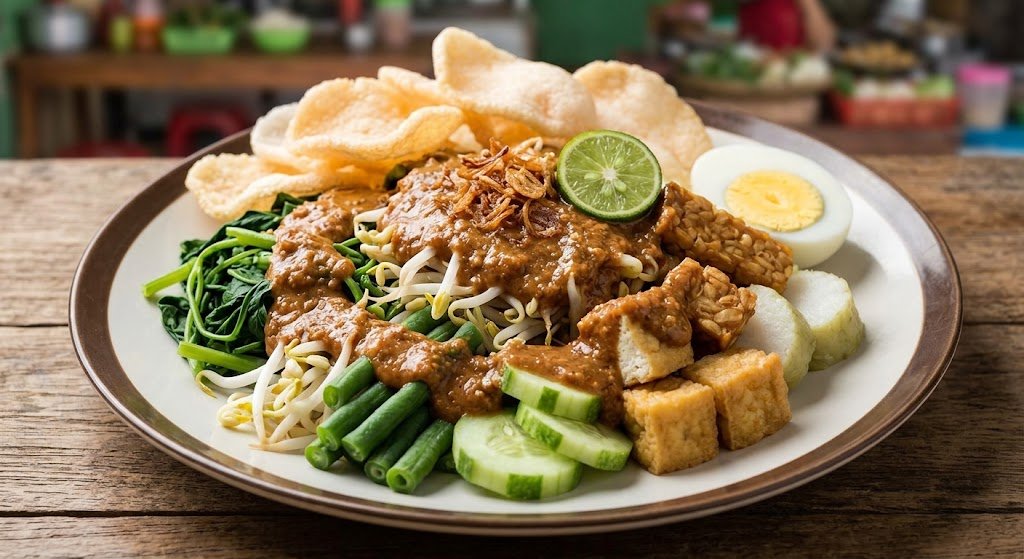
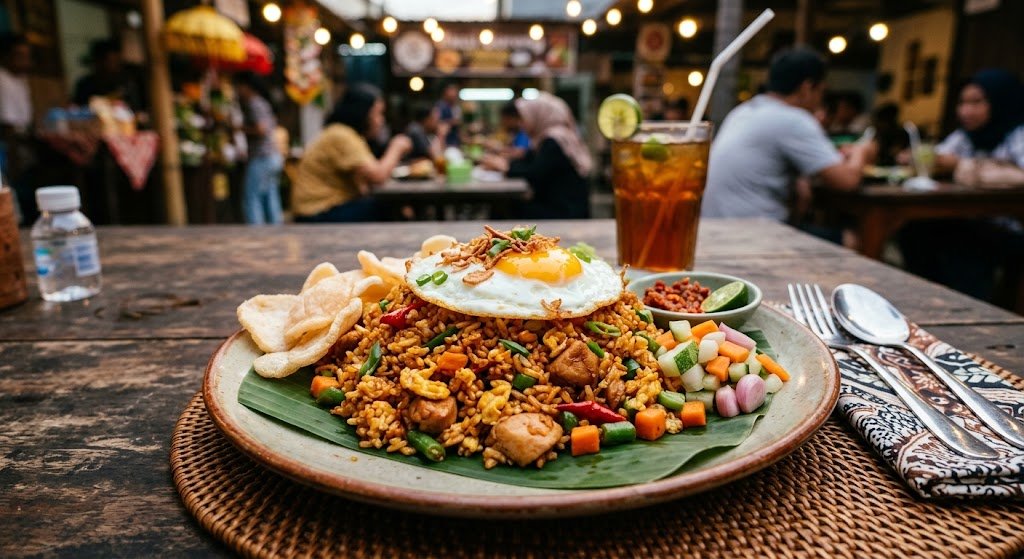
Nasi Rawon / Rice with Black Beef soup
What is Nasi Rawon?
The Broth: The soup features a distinct, dark black color and deep, earthy flavor created by keluak (or kluwek), a native Indonesian nut.
The Meat: It is cooked with tender chunks of beef, usually brisket or short ribs, simmered in a rich spice paste of garlic, shallots, ginger, and galangal.
How it is Served: The hot black soup and beef are served over or alongside steamed white rice.
]The Toppings: It is typically garnished with fresh bean sprouts, salted duck egg, green onions, crispy fried shallots, prawn crackers, and spicy chili sambal.

“must-try Indonesian street food guide”
For your reference, please visit this website
https://migrationology.com/indonesian-food/
You can explore more about local flavors and authentic dishes through the
https://www.tasteatlas.com/indonesia
The Spice Islands
Indonesian spice tourism is a rapidly growing travel niche driven by the government’s global Indonesia Spice Up the World campaign
A Story of Indonesia’s Spices
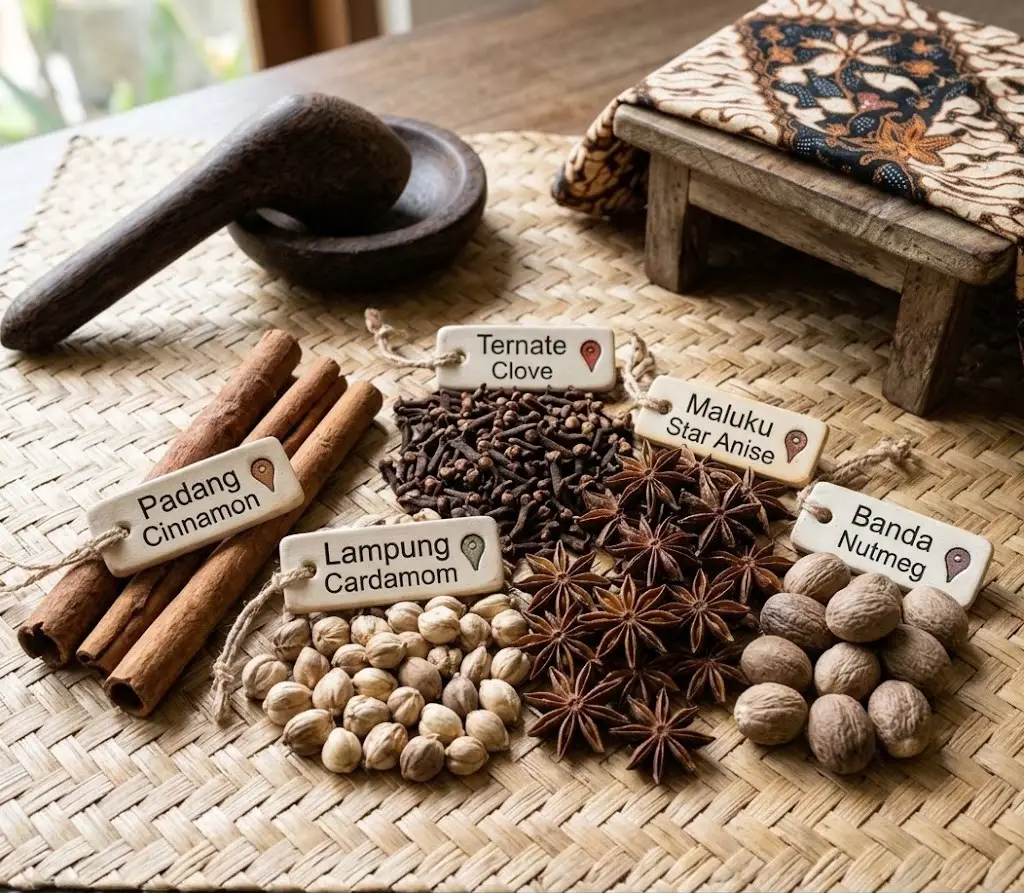
Long before Indonesia was known as a country of thousands of islands, its islands were already famous for something precious: spices Imagine yourself standing on a wooden boat hundreds of years ago, sailing across the warm waters of Southeast Asia. The air is humid, the sea is deep blue, and somewhere ahead lies a chain of green islands. You have traveled for months because of a treasure that is worth more than gold in distant lands.Cloves. Nutmeg. Mace. Cinnamon. Pepper. These are the spices of Indonesia.
The Spice Islands
Far to the east of Indonesia are the Maluku Islands, historically called the Spice Islands. On these islands grew cloves and nutmeg—spices that were incredibly valuable in Europe and other parts of the world. For the people who lived there, these were simply plants growing in their homeland. But to foreign traders, they were treasures.Clove trees filled the air with their distinctive fragrance. Nutmeg trees produced a fruit whose seed and red covering—mace—could both be used as valuable spices.Imagine walking through a village surrounded by these trees. The scent of cloves drifts through the warm tropical air. Farmers harvest the precious buds, dry them under the sun, and prepare them for traders.Then the ships arrive.
The journey of the spices.
Arab, Indian, Chinese, and Southeast Asian traders had been involved in the region’s spice trade for centuries. Spices traveled from island to island and eventually across the Indian Ocean. They were not only used to make food taste better. Spices were used in medicine, perfumes, religious practices, preservation, and traditional ceremonies. Eventually, Indonesian spices reached Europe. And Europeans wanted more.Much more. The demand for spices helped make the Indonesian archipelago one of the most important places in the world for international trade.
When spices became a reason for war.
By the 16th and 17th centuries, European powers began competing fiercely for control of the spice trade. The Portuguese arrived first, followed by the Dutch and others. The Dutch East India Company (VOC) eventually became enormously powerful in the Indonesian archipelago. It tried to control the production and trade of valuable spices, particularly cloves and nutmeg in the Maluku Islands. For the people living on these islands, this was not simply a story about commerce. It was also a story of colonialism, resistance, conflict, and loss of control over their own resources. The tiny seeds and dried flower buds that had once connected Indonesian communities to neighboring civilizations had become part of a much larger struggle for global power.
But the story didn’t end there. Today, you can walk through an Indonesian market and see the descendants of this ancient spice tradition everywhere. There is lada (pepper), cengkeh (clove), pala (nutmeg), kayu manis (cinnamon), jahe (ginger), kunyit (turmeric), lengkuas (galangal), and many others. And Indonesian food would be almost impossible to imagine without them.
A bowl of rendang carries the warmth of spices.
Soto gets its distinctive character from a mixture of herbs and spices.
Nasi goreng can be transformed by aromatic seasonings.
And jamu, Indonesia’s traditional herbal drinks, reflects centuries of knowledge about plants and their uses. So when you taste Indonesian food, you are tasting more than a recipe.You are tasting a piece of history.
From tiny islands to the world
Perhaps the most fascinating part of Indonesia’s spice story is this:Some of the world’s greatest historical journeys began with something incredibly small.
A single clove bud.
A single nutmeg seed.
A handful of peppercorns.
These tiny things connected Indonesian islands with India, Arabia, China, Europe, and eventually the wider world. And that is why Indonesia’s spices are more than ingredients.
.They are a story of nature, culture, trade, exploration, conflict, and resilience—carried across the oceans by their unforgettable aroma.
Jamu: Indonesia’s Ancient Herbal Medicine
What is Jamu Indonesia?
Jamu is a traditional Indonesian herbal drink and wellness tradition made from plants, roots, spices, fruits, and other natural ingredients. It has been used in Indonesian communities for centuries and remains an important part of Indonesian culture.
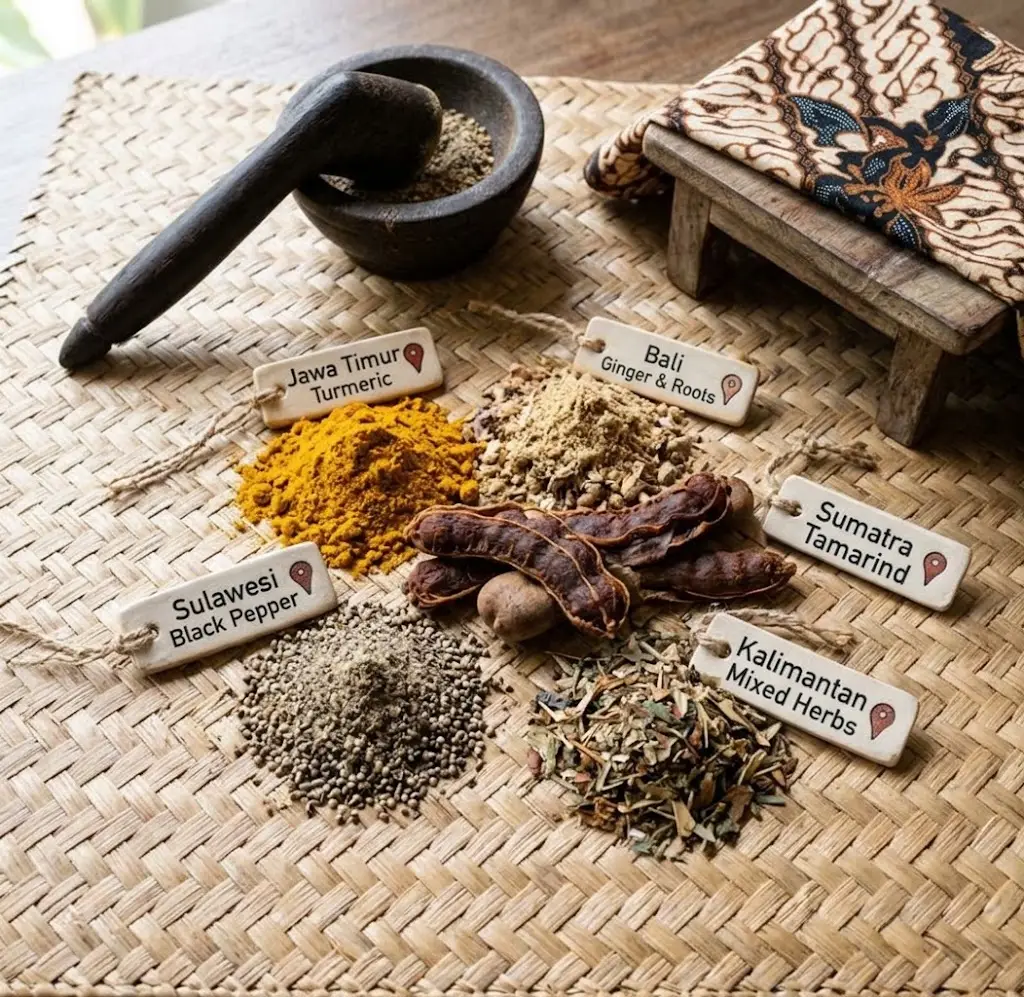
What is Jamu made from? There are many types of jamu, and recipes vary from region to region. Common ingredients include:Kunyit (turmeric) — gives jamu its bright yellow color.Jahe (ginger) — adds warmth and a spicy flavor.Kencur (aromatic ginger) — commonly used in traditional herbal preparations.Temulawak (Java turmeric) — traditionally used in jamu preparations.Asam jawa (tamarind) — gives a sour, refreshing taste.Serai (lemongrass) — adds a fresh aroma.Gula jawa (palm sugar) — used to make some varieties sweeter.One of the best-known varieties is jamu kunyit asam, made primarily with turmeric and tamarind. It has a distinctive golden color and a combination of earthy, sour, and slightly sweet flavors.ype your paragraph here
Why do Indonesians drink Jamu?
Traditionally, jamu has been consumed as part of everyday wellness and traditional health practices. Different recipes have traditionally been associated with different purposes—for example, some are consumed as refreshing drinks, while others are traditionally taken for digestion, energy, or general well-being. It’s important to distinguish these traditional uses from modern medical claims: jamu should not automatically be considered a proven treatment for a disease.
Jamu is also a cultural tradition
Jamu is more than an herbal beverage.For generations, knowledge about preparing jamu has been passed from parents and grandparents to younger generations. Traditional sellers known as ibu jamu have also played an important role in bringing freshly prepared jamu to communities. You may see jamu being sold in: Traditional markets Small street stalls Bottles carried by jamu sellers, Modern cafés and restaurants, Packaged herbal-drink products Jamu and Indonesian identity
What makes jamu particularly interesting is the connection between nature, food, traditional knowledge, and Indonesian culture.In 2023, UNESCO inscribed Jamu wellness culture as an Intangible Cultural Heritage of Humanity, recognizing its cultural importance to Indonesia.
So, if you visit Indonesia and someone offers you a glass of jamu, you’re not simply being offered a herbal drink.You’re being offered a small taste of Indonesian history and tradition.
INDONESIAN COFFEE
Why is Indonesian coffee special? Indonesia has a unique environment for growing coffee. Many coffee farms are located around volcanic mountains, where fertile soils, tropical temperatures, high elevations, and abundant rainfall create excellent conditions for coffee cultivation. Coffee arrived in the Indonesian archipelago during the Dutch colonial period, and production eventually spread to many islands. Today, Indonesian coffee is known internationally.
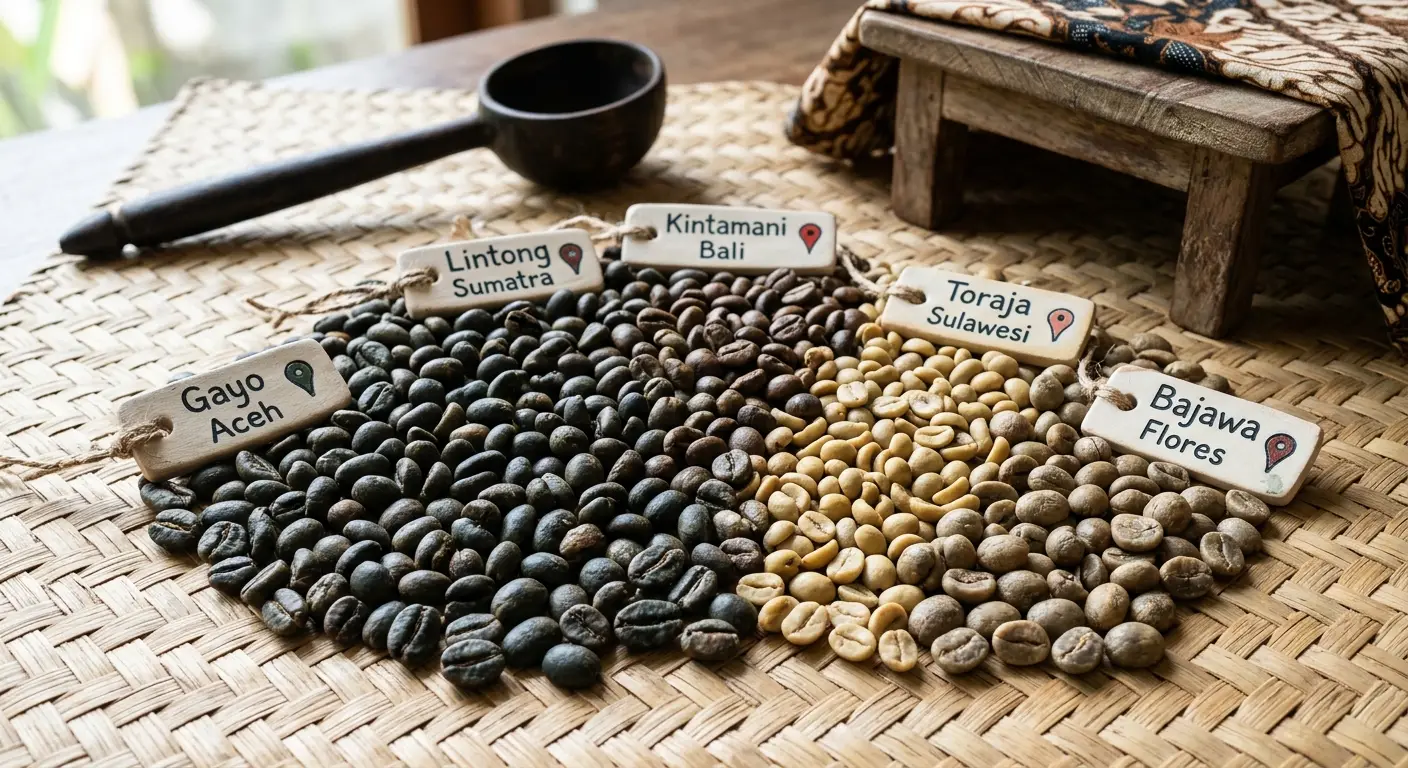
Indonesia’s Famous Coffee
Indonesia is one of the world’s most interesting coffee-producing countries. Its coffee is famous for its rich aroma, earthy flavors, and great variety, largely because coffee is grown across many different islands and volcanic regions. Imagine walking through the highlands of Indonesia early in the morning. The air is cool, mist hangs over the mountains, and rows of coffee plants grow beneath the shade of trees. Farmers carefully pick the ripe red coffee cherries by hand. This is where the journey of Indonesian coffee begins.
Famous Indonesian coffees
1. Sumatra — Mandheling & Gayo
Sumatran coffee is famous for its full body and earthy, herbal character. It can have flavors reminiscent of dark chocolate, spices, nuts, and sometimes dried fruit.Gayo coffee, grown in the Aceh highlands, is another highly regarded Indonesian coffee, often known for its balanced acidity and complex aroma.
2. Java Coffee
Java was one of the earliest Indonesian regions where coffee became commercially important. The name “Java” itself became associated with coffee in parts of the world.Java coffees are often smoother and cleaner, with chocolate, spice, and nutty notes.
3. Sulawesi — Toraja
Coffee from Toraja in South Sulawesi is prized for its complexity. It can have a smooth body with earthy, spicy, fruity, and chocolate-like flavors.
4. Bali — Kintamani
Kintamani coffee grows in the highlands of Bali, particularly around Mount Batur. It is often characterized by a bright acidity and citrus or fruity notes, giving it a very different personality from many Sumatran coffees.
5. Flores — Bajawa
Flores coffee, especially from the Bajawa highlands, can have rich chocolate, spice, nutty, and sometimes fruity characteristics. What about Kopi Luwak? One of the most famous—and controversial—Indonesian coffees is Kopi Luwak. It is made using coffee cherries that have been eaten and passed through the digestive system of the Asian palm civet, after which the beans are collected, cleaned, dried, and roasted. Its unusual production process has made it famous worldwide, but there are significant animal-welfare concerns, particularly with civets kept in captivity or subjected to poor conditions. If you want to try it, look for genuinely responsible, traceable producers rather than assuming that every coffee labeled “Kopi Luwak” comes from ethical practices.
Coffee culture in Indonesia
Coffee isn’t just an agricultural product in Indonesia. It is part of everyday social life.In many Indonesian cities and villages, people gather at a warung kopi, or coffee shop, to drink coffee, talk with friends, watch football, discuss business, or simply relax. A simple cup of kopi tubruk is especially traditional. Finely ground coffee is mixed directly with hot water, often with sugar, and the grounds settle at the bottom of the cup.
More than just coffee
Indonesian coffee tells a story about volcanoes, farmers, colonial history, local communities, and Indonesian hospitality. From the misty mountains of Sumatra to the volcanic highlands of Bali and Flores, every region gives its coffee a different character.
So when you drink Indonesian coffee, you’re not just tasting a beverage—you are tasting the landscape and culture of the island where it was grown.
The Highland Teas of Indonesia
How tea arrived in Indonesia?
Tea was introduced to the Indonesian archipelago during the Dutch colonial period, and commercial tea cultivation expanded significantly in Java and other highland areas.Today, Java and West Java are particularly important tea-producing regions. Imagine traveling through the highlands of West Java. The temperature is cooler than the cities below. Green hills stretch into the distance, and rows of tea bushes cover the slopes like a giant green carpet.Early in the morning, tea workers carefully pick the young leaves. Those leaves will eventually become the tea in someone’s cup.
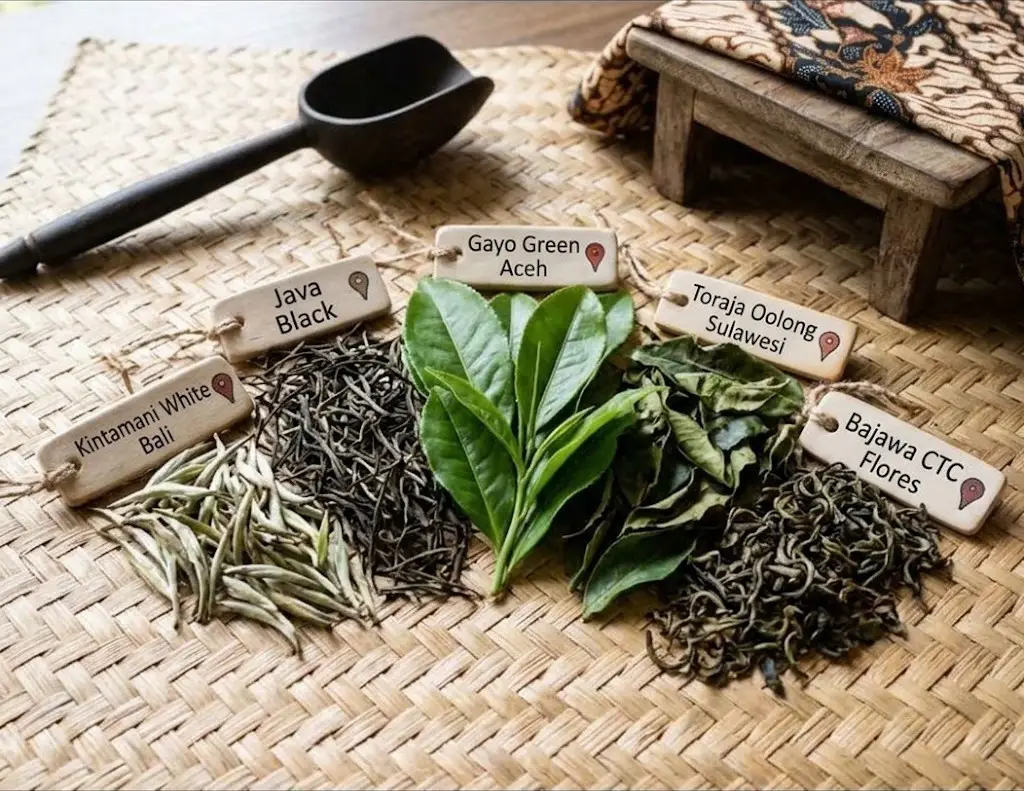
Indonesian Tea: A Taste of the Tropical Highlands
When people think about Indonesia, they often think of coffee, spices, Bali, or beautiful beaches. But Indonesia also has a long and important tea tradition.Tea grows especially well in Indonesia’s cool, mountainous regions, where volcanic soil, rain, and mist create ideal conditions for tea plants.
Famous Indonesian tea
1. Java Tea
Java produces both black and green tea. Indonesian black teas are often smooth and full-bodied, with earthy, malty, or slightly floral characteristics.
2. West Java Tea
West Java is one of Indonesia’s major tea-growing areas. The mountainous regions around Bandung, Puncak, and Garut are particularly associated with tea plantations.The cool climate and high elevation can produce aromatic teas with fresh, delicate flavors.
3. Indonesian Green Tea
Green tea is also produced in Indonesia. Because the leaves are processed differently from black tea, they retain a fresher, more vegetal character.
Tea in Indonesian daily life
Tea is much more than an agricultural product. Walk into an Indonesian home or a small restaurant and you may be offered a glass of teh manis, sweet black tea. It is one of Indonesia’s most familiar everyday drinks.Teh manis literally means “sweet tea.” Strong black tea is combined with plenty of sugar and served hot or cold. On a hot afternoon, es teh manis—iced sweet tea—is especially popular. You might sit at a small warung, order a plate of fried rice or noodles, and see a tall glass of golden-brown iced tea arrive beside your food.
Tea plantations as part of Indonesia’s landscape
One of the most beautiful ways to experience Indonesian tea is by visiting a plantation.In the highlands of West Java, you can walk between rows of tea bushes, see workers harvesting leaves, and learn how fresh leaves are transformed into the tea that eventually reaches markets around Indonesia and the world. The landscape itself is part of the experience:green hills + volcanic soil + cool mountain air + endless tea plants.
Tea and Indonesian culture
Indonesian tea has a particularly interesting connection with hospitality.Offering someone a cup of tea is a simple way of welcoming a guest. Whether it is served in a family home, a restaurant, or a village warung, tea often creates an opportunity to sit down, talk, and spend time together. So Indonesian tea isn’t only about the leaves.It is also about the mountains where it grows, the farmers who harvest it, and the people who share it. And perhaps that’s the best way to understand Indonesian tea:Coffee may tell you about Indonesia’s mountains, but tea invites you to sit down and enjoy the view.