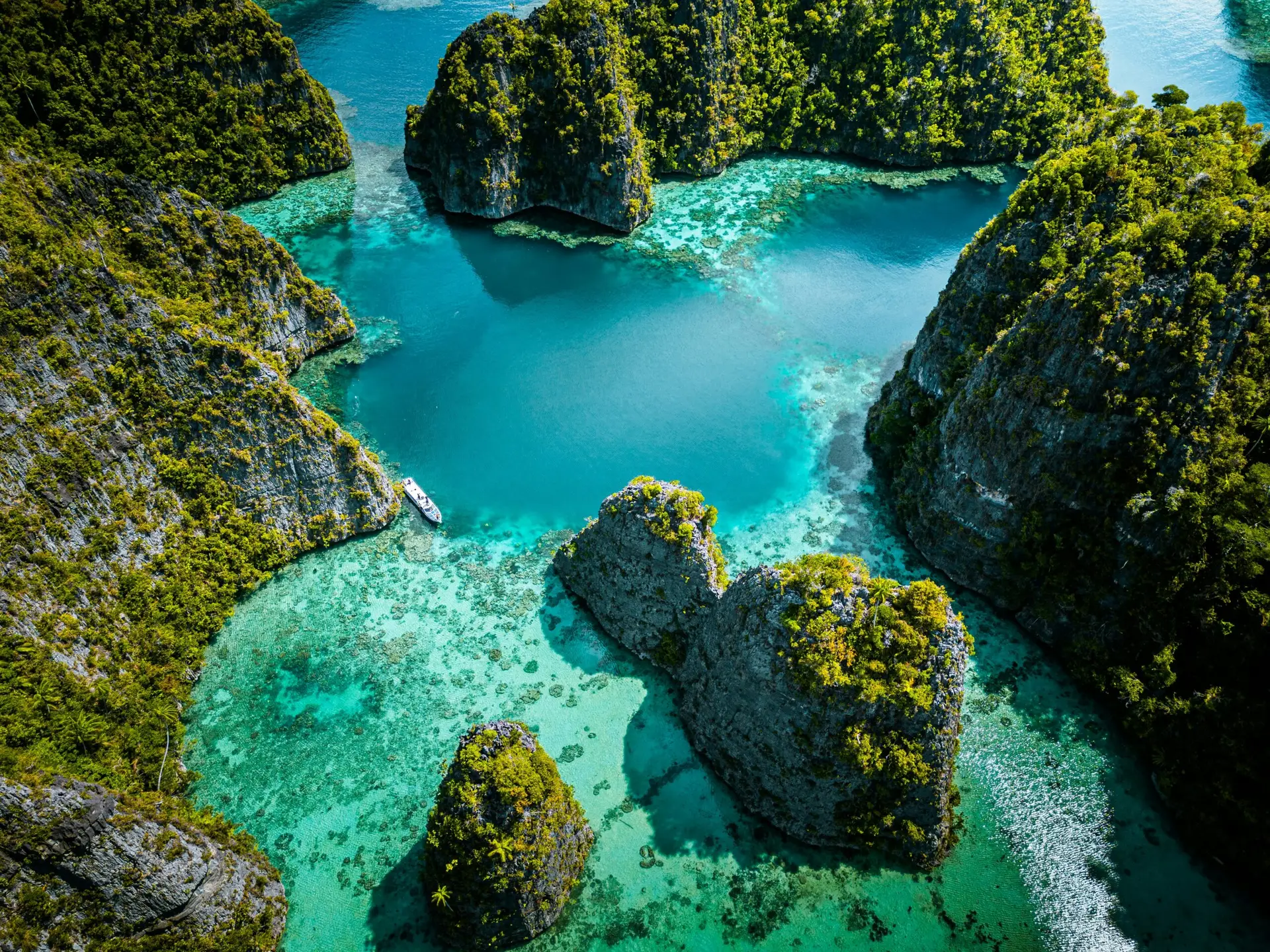
Explore the breathtaking beauty of Eastern Indonesia. From Raja Ampat’s pristine waters to Maluku’s volcanic landscapes, discover untouched nature and vibrant cultures.
Eastern Indonesia — Where the World Still Feels Untouched.
There is an Indonesia beyond the familiar cities, beyond the crowded beaches and busy streets.Travel east, and the country begins to change. The islands become more distant. The ocean becomes wider. Mountains rise dramatically from the sea, while small villages appear along quiet coastlines. Here, life moves to a different rhythm—one shaped by nature, tradition, and the endless sea.
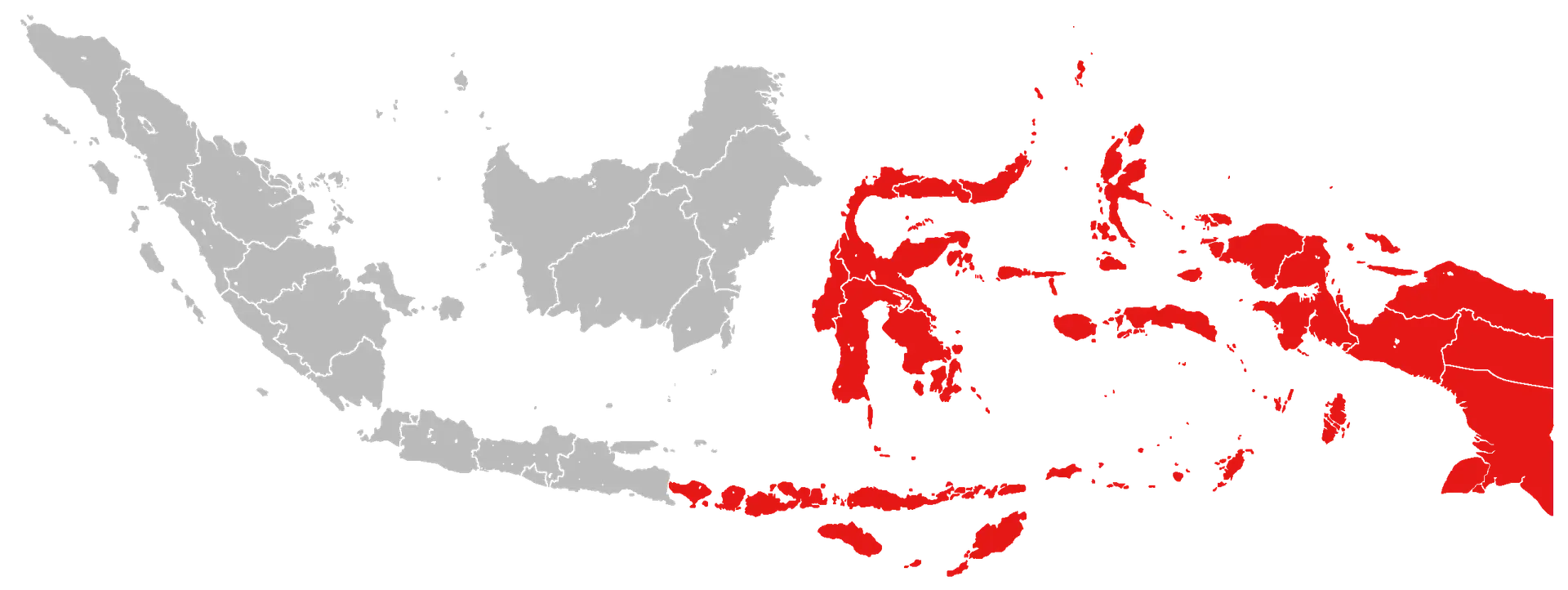
This is Eastern Indonesia. From the legendary waters of Raja Ampat in Papua to the volcanic landscapes of Maluku, from the dramatic islands of East Nusa Tenggara to the ancient traditions of Timor, the eastern part of Indonesia is a world of extraordinary contrasts. In the morning, fishermen leave their villages as the first sunlight touches the ocean. On another island, children walk along a quiet beach while traditional boats rest on the shore. Farther inland, mountains rise above forests that have existed for generations, while local communities continue traditions passed down from their ancestors.
Eastern Indonesia is not only about spectacular scenery. It is about people.
The warmth of a village welcome.
The stories of elders.
The rhythm of traditional music.
The colors of woven fabrics.
The taste of food prepared from recipes carried through generations. And everywhere, there is the sea.The sea connects these islands—not separates them. It has carried traders, fishermen, travelers, cultures, and stories across generations. Long before modern tourism discovered these places, the people of Eastern Indonesia were already connected to the wider world through the ocean. Perhaps that is what makes this region so fascinating. It feels remote, yet it has always been connected. It feels untouched, yet it carries centuries of history. And it feels like the edge of Indonesia, while in many ways, it is a gateway to an entirely different world. As the sun begins to set, the sky turns gold above the islands. A small boat disappears slowly toward the horizon. For a moment, everything becomes quiet. And you realize that Eastern Indonesia is not simply somewhere you travel to.
It is somewhere you discover. You discover landscapes that seem impossible. You discover cultures that remain deeply rooted in tradition. You discover communities whose stories deserve to be heard. And perhaps most importantly, you discover a different way of seeing Indonesia—not just as a country of thousands of islands, but as a living collection of people, cultures, oceans, and stories.
Eastern Indonesia is waiting. Not to be conquered, but to be understood.
*** Source from Simon Spring